Key takeaways
- SEO, LinkedIn and content marketing are not rival options; they do different jobs.
- Useful content is the foundation: it is what search engines find and what people share.
- SEO helps the right people find your website when they search.
- LinkedIn helps people who already know you, or your partners, see your expertise and trust it.
- Start with clear answers on your own website, then reuse them on LinkedIn with a link back.
Most accountancy firms are told they should be ‘doing SEO’, ‘posting on LinkedIn’ or ‘investing in content’, often by people selling one of the three. With limited time, it is reasonable to ask which one deserves your attention first.
This guide explains what each channel actually does, why they work best as one system and where a small firm can sensibly start. If you are still weighing up whether content is worth it at all, read does content marketing work for UK accountancy firms first.
Should an accountancy firm focus on SEO, LinkedIn or content marketing?
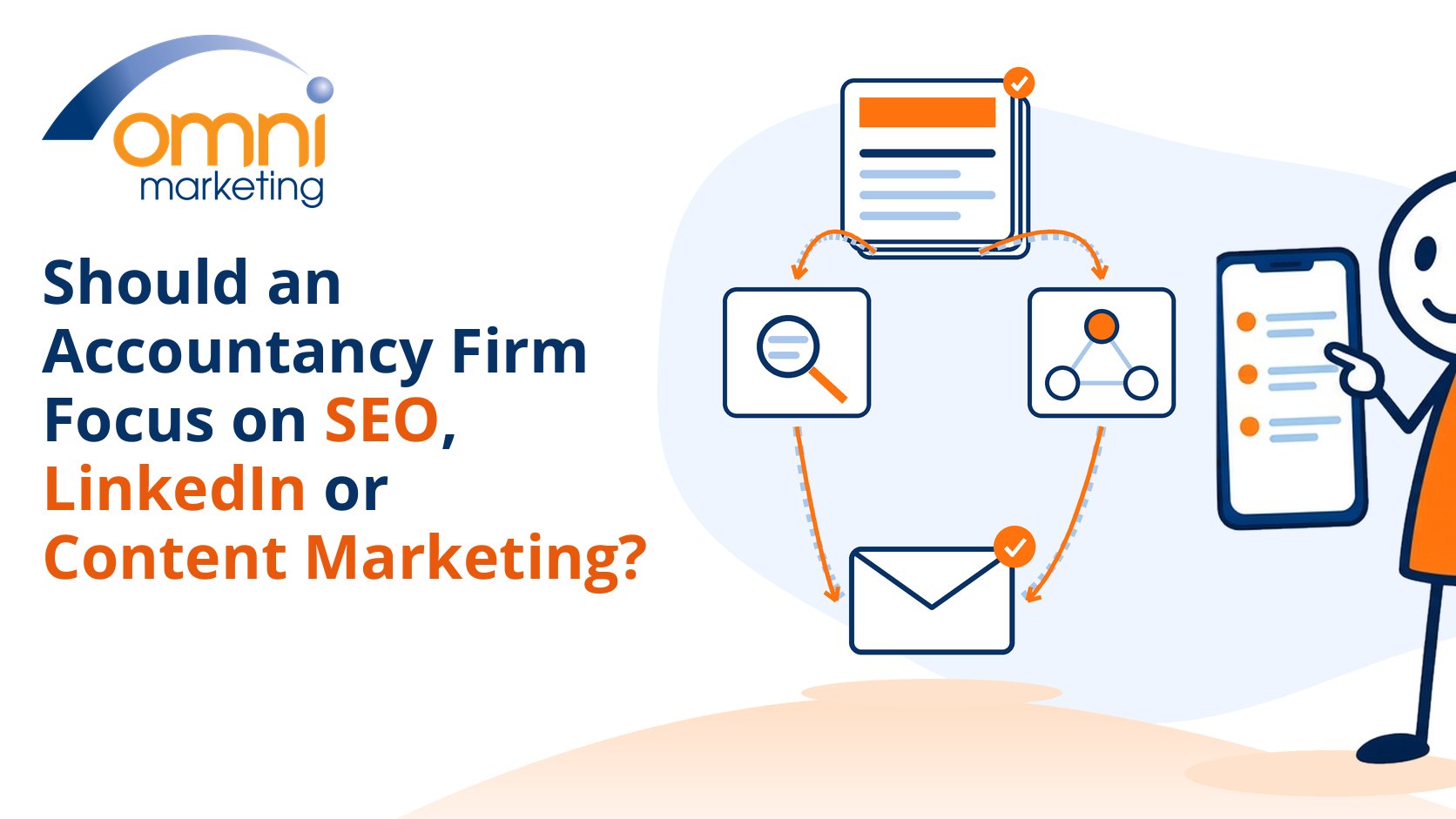
Focus on useful content first, then use SEO and LinkedIn to get it seen. Content is the material that answers your prospects’ questions; SEO helps people find it through search, and LinkedIn puts it in front of people who already know you. Treated as one system, each makes the others work harder.
Watch the guide
Should an accountancy firm focus on SEO, LinkedIn or content marketing?
Prefer to watch? This short guide covers what SEO and LinkedIn each do for an accountancy firm, why useful content is the common thread, where a small firm should start and how to tell which channel is working.
Is it really a choice between SEO, LinkedIn and content marketing?
Not really. The three labels describe different parts of the same job: helping the right prospects find you, check you and feel confident getting in touch.
ACCA’s modern marketing guidance for practices puts them side by side. It says people choose accountants they trust, so firms should build visibility on platforms such as LinkedIn and demonstrate their expertise with educational content that attracts the right prospects. The same guidance says your website should be more than a digital brochure: it should clearly explain who you help and how, and include a strong call to action.
So the useful question is not which channel wins. It is what each one is for, and in what order to build them.
What does SEO do for an accountancy firm?
SEO helps people who are searching for help find your website, and helps them decide whether to visit. Google’s SEO Starter Guide describes it as helping search engines understand your content and helping users find your site.
For an accountancy firm, that mostly means clear pages that answer the questions your best-fit prospects actually type, written in the words they use, and kept up to date. Google’s guidance on creating helpful, reliable, people-first content says its systems aim to prioritise information created to benefit people, not content written to manipulate rankings.
Two limits are worth knowing. Google says there is no guarantee any particular site will appear in its results, and that some changes take effect in a few hours while others can take several months. If local searches matter to you, Google’s Business Profile help also says there is no way to request or pay for a better local ranking. SEO is a steady, long-term job, not a switch.
What is LinkedIn good for?
LinkedIn is good for being seen and trusted by people who already know you, or know someone who knows you: clients, introducers, former colleagues and local business owners.
It is also cheap to start. LinkedIn’s help centre says you can create a LinkedIn Page for free, and that Pages help members learn about your business and its services. Partners’ own profiles matter too, because ACCA’s point is that people choose accountants they trust.
A post is a moment in a feed. A page on your own website stays put, so people can find it, check it and come back to it. That is why LinkedIn works best when it points people back to your website.
Why is content the common thread?
Because both SEO and LinkedIn need something worth finding or sharing. Without useful content, SEO has little to work with and LinkedIn becomes a stream of announcements.
ACCA’s In Practice article The critical factors in winning new clients makes the point well. It notes that almost any potential new client will search online for your firm before deciding whether to get in touch. It asks what they would find: a website that answers their questions, or links to helpful blogs and resources?
The same article suggests making each piece of content work hard. A blog can become a video, a downloadable resource and bite-sized social posts that link back to your website. That is the system in one sentence. Write it once on your site, help search engines find it, and share it on LinkedIn.
For help choosing topics, see our guide on what an accountancy firm should write about.
Where should a small firm start?
Start with your website, then add LinkedIn. A practical first step is to list the five questions your best-fit prospects ask most often before they become clients.
Answer each one clearly on your website, in plain English, for the kind of client you want more of. ACCA’s guidance suggests choosing a small number of core niches and tailoring your messages to them, which makes your content easier to write and easier to find. Our guide on whether an accountancy firm should specialise in a sector covers that choice.
Then turn each answer into a few LinkedIn posts that link back to the full article, shared from the firm’s Page and the partners’ own profiles. Keep every claim accurate. ICAEW’s marketing helpsheet reminds firms that marketing must not bring the profession into disrepute. It also warns that websites can easily give a misleading impression of a firm’s size and scope. Check your own professional body’s guidance too.
A practical check
Build one system, not three
- List five prospect questions. Note what your best-fit prospects ask before they become clients.
- Answer them on your website. Plain English, for the clients you want more of.
- Make each page findable. Use the words prospects use and keep pages up to date.
- Share on LinkedIn with a link back. Turn each answer into a few posts from the firm and its partners.
- Keep every claim accurate. Nothing you could not stand behind.
How can a firm tell which channel is working?
Judge each channel by the enquiries it helps produce, not by likes, followers or rankings on their own. ACCA’s guide on creating a marketing plan makes a similar point. Your plan should line up with your business goals; hoping for a set number of social media followers is not what it is about.
Ask every new enquiry how they found you and what they read first. Note whether they mentioned an article, a search or a LinkedIn post, and whether they were a good fit. Because Google says search changes can take weeks or months to show, review the pattern over months rather than weeks.
For a wider look at reaching the clients you want, read how an accountancy firm can attract more of the right clients. If referrals are a big part of your work, see whether to rely on referrals or build a content-led marketing system.
SEO, LinkedIn and content are not competing bets. Built in the right order, they help the right prospects find you, check you and get in touch. If you would like to see how your firm appears when people ask AI tools for an accountant, request a free AI Visibility Report.