Key takeaways
- Prospective clients want to see whether a firm understands businesses like theirs before they make contact.
- Clear service scope, fee approach and communication expectations make comparison easier.
- Specific proof and a simple next step are more persuasive than broad claims about being “trusted” or “expert”.
- Accurate, consistent information across the website and business profile helps people recognise the right firm.
Choosing an accountant is a considered decision. A prospective client is often trying to avoid uncertainty as much as they are trying to buy a service: they want to know whether the firm is right for their business, what support they will receive and what happens next. A good website helps them answer those questions before a first call.
Show the right fit before listing every feature
Prospective clients first need to recognise themselves in the firm’s offer. “We provide accounting, tax and payroll” may be accurate, but it does not tell an owner whether you work with a business at their stage, in their sector or with their particular concern.
Start each important service page with the buyer’s situation: for example, a growing limited company that needs clearer management information, a landlord trying to understand their obligations, or a professional service business that wants more regular financial support. Then explain how the service helps, what is included and when it is likely to be suitable. That is more useful than attempting to rank for every possible accounting phrase.
Google’s guidance on helpful, reliable, people-first content asks whether a page gives its intended audience enough information to achieve their goal. For an accountancy firm, the reader’s goal is often simply to decide whether you are worth speaking to.
Make services and fees easier to understand
People comparing accountants usually want to understand what is covered and how the fee is approached. That does not require publishing a price for every possible circumstance. It does require replacing vague language with useful boundaries: what is normally included, what can change the scope and how a quote is agreed.
Independent guides for people choosing an accountant commonly recommend asking about the services included, fee structure and the support a client can expect. Xero’s UK guide to choosing an accountant and Unbiased’s comparison questions are useful reminders of the questions your own pages should anticipate.
A practical website checklist
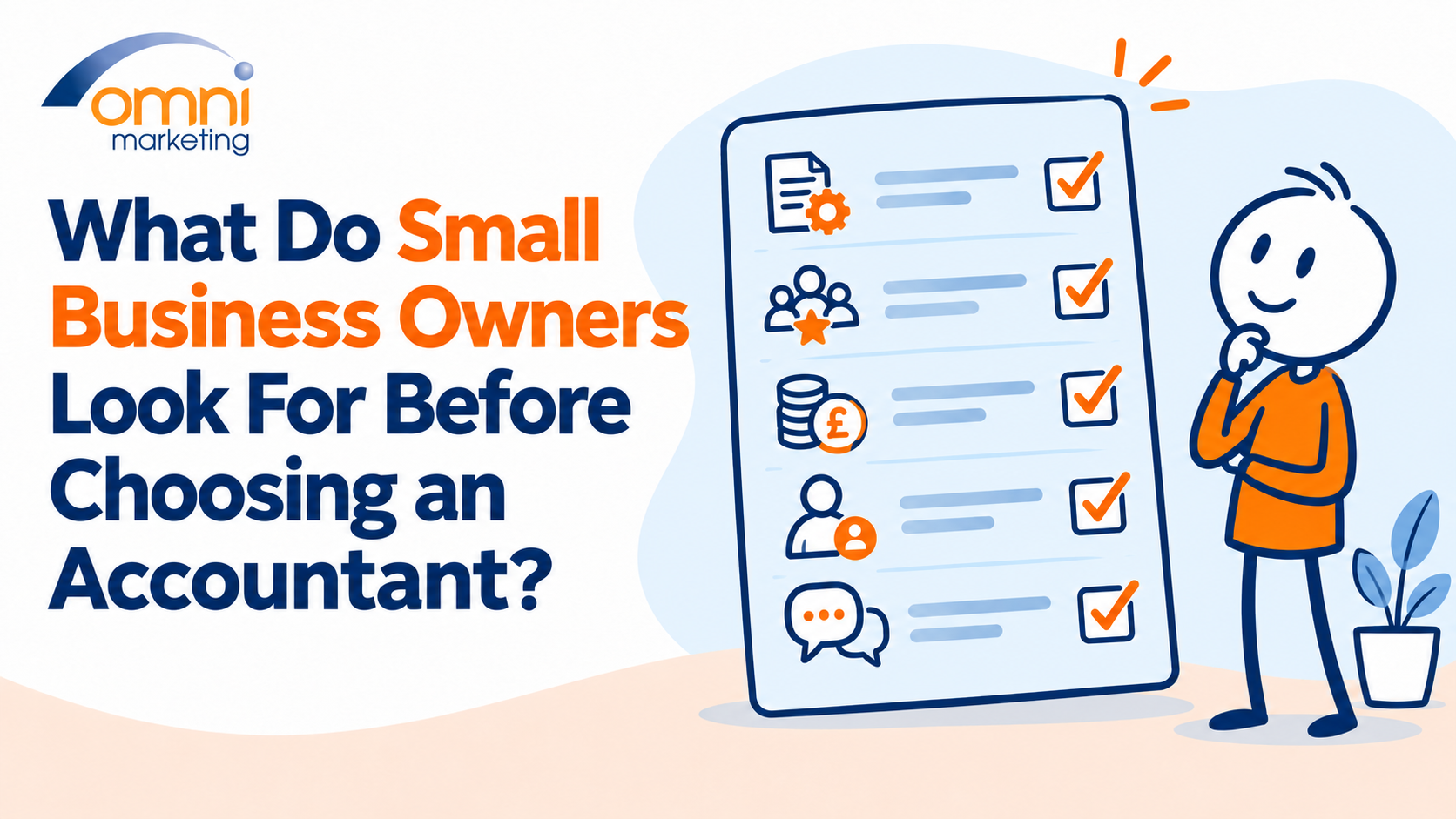
The five answers a prospective client should find quickly
Who is this for?
Name the business types, situations or sectors you are set up to help, without claiming every niche.
What is included?
Explain the core service, typical boundaries and the problems it is designed to solve.
How are fees discussed?
Set out the fee approach and what information is needed before a tailored quote can be given.
Who will support me?
Clarify who handles the relationship, how communication works and what clients can expect.
What happens next?
Give a low-friction, honest next step: an introductory call, an enquiry form or a clear checklist to prepare.
Why should I trust this?
Use specific, checkable information about the firm, its people and its approach—never generic superlatives.
Reduce uncertainty about the working relationship
For many owners, the service is not just year-end accounts. They are choosing the kind of relationship they want when a question comes up. A potential client may reasonably want to know whether they will have a named contact, how quickly a routine query is handled and whether proactive conversations form part of the service.
Be clear without promising an unrealistic response time. Explain the normal method of communication, who is involved and when a client should expect to hear from you. A short “what working with us looks like” section can do more than another paragraph of technical credentials because it helps the reader picture the experience.
Use proof without overclaiming
Trust signals work best when they are concrete. Professional memberships, named team members, carefully approved client feedback and useful explanations of your process can all help a prospective client assess whether the firm is credible. Do not substitute them with unsupported claims such as “the best accountant in town”.
Accuracy matters beyond the website too. Google’s Business Profile guidelines say businesses should represent themselves accurately and consistently in the real world. Keeping the firm name, service area, contact details and core description aligned helps prospective clients recognise the same business wherever they encounter it.
This is also where a clear author or team presence helps. A person considering professional advice should be able to see who is behind the guidance, not just a faceless collection of pages. The aim is not to manufacture authority; it is to make real expertise easier to understand and verify.
Turn clarity into a sensible next step
A good service page does not force a decision. It makes the next step feel proportionate. Invite the reader to arrange an introductory conversation, ask for a tailored quote or share a few basics about their business. Tell them what happens after they do so and what information is useful to bring.
Before changing a page, review it as a prospective client would. Can they tell who it is for, what it covers, what they need to decide and how to move forward? If the answer is no, improving those fundamentals is likely to make the site more useful before any additional marketing activity begins.
For a wider view of how clear information supports discovery, read our guide to improving business visibility in AI search and our explanation of what a useful local service page should include.