Key takeaways
- A mention, citation and recommendation each describe a different outcome in an AI answer.
- A citation can support a fact without recommending the business it links to.
- A recommendation is the clearest sign that the answer considers a business relevant to that buyer question—but it is still not a guarantee of an enquiry.
- Use the same realistic questions and record the date, tool and outcome before changing your marketing.
It is easy to put every appearance in an AI answer into one bucket and call it “visibility”. That can make a useful observation sound more meaningful than it is. A local business owner needs to know whether the system named the company, linked to a source, or actually presented it as a sensible option for the customer’s situation.
Direct answer
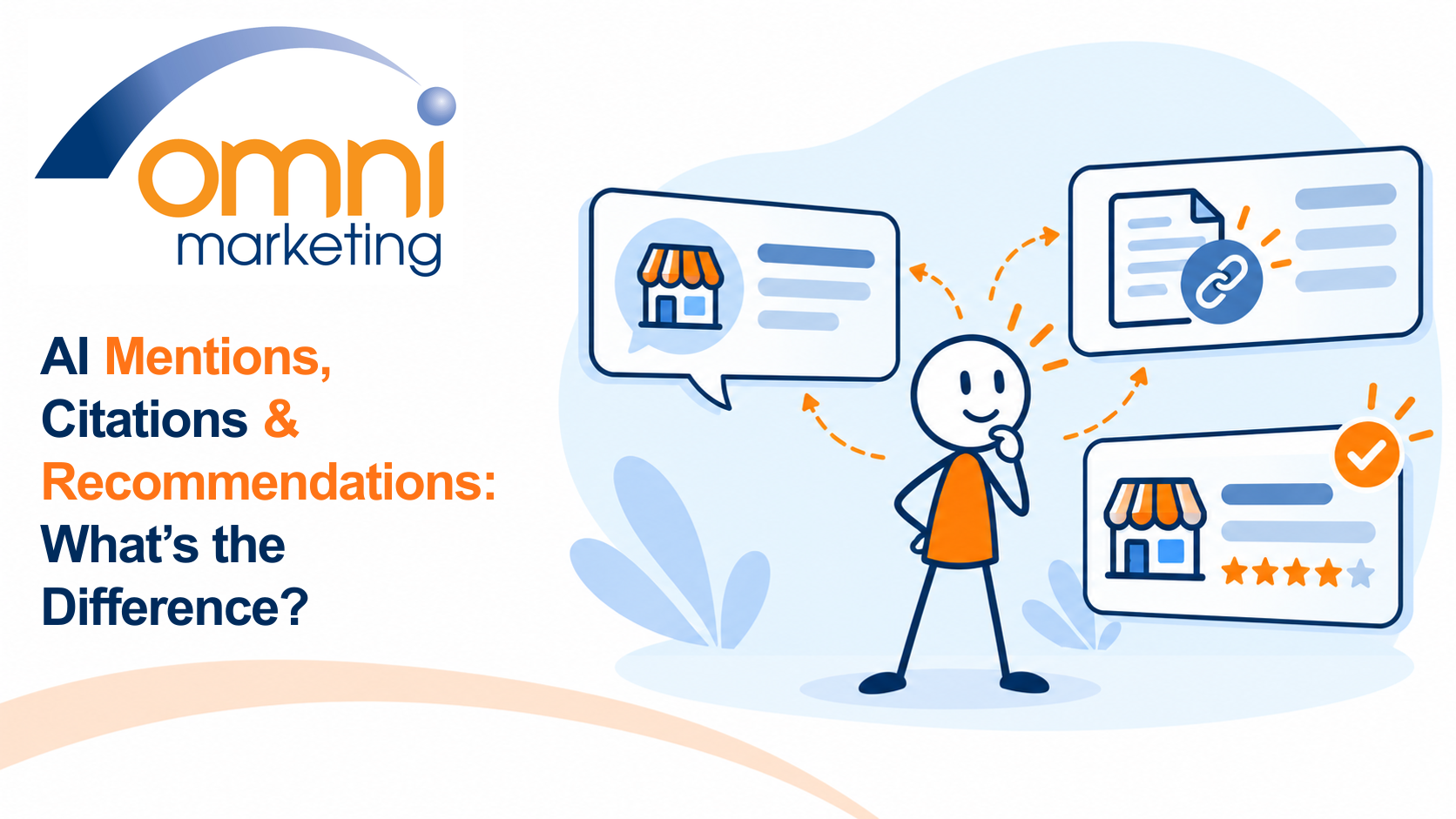
AI mentions, citations and recommendations are related but not the same. A mention shows that a business was named; a citation shows which source supports part of an answer; a recommendation suggests the business fits the question. Record all three separately.
What is an AI mention?
An AI mention is simply the business name appearing in an answer. It may appear in a list, a comparison or a sentence explaining local options. That is useful evidence that the business is part of the answer, but it does not tell you why it appeared or whether the reader was encouraged to contact it.
A mention also is not automatically a link. Some answers name organisations without sending the reader to their websites. Treat it as a visibility signal, not proof of traffic or commercial intent.
What does a citation mean?
A citation is a source link attached to an answer or a claim within it. It helps the reader check the information; it is not necessarily an endorsement of the source or the business. OpenAI’s guidance on ChatGPT search, for example, explains that search responses may include citations which readers can open to review the source.
That distinction matters. Your website might be cited because it provides a clear fact, while another business is recommended as the better fit for the question. Conversely, an answer may recommend a business in prose without linking to its own site. The reader’s intent and the answer format both matter.
A practical distinction
Three signals, three questions
Mention
Question: Was the business named? This tells you whether it appeared in the answer at all.
Citation
Question: Which page supported the answer? This helps you understand what a reader can verify or visit.
Recommendation
Question: Was the business put forward as a fit? This is the closest signal to the buyer’s decision.
When is a business actually being recommended?
A recommendation goes beyond being named. The answer presents a business as one of the options that may suit the customer’s need—perhaps because of a service, audience, location or stated strength. The exact wording matters: “Here are three local accountants” is different from “this firm may suit a growing limited company that needs management information”.
That is why a helpful test uses complete buyer questions rather than a broad search for “best businesses”. Google explains that its AI features may use different models and techniques and may show different supporting links; its guidance for AI features also makes clear that meeting search requirements does not guarantee appearance. Treat one answer as a snapshot, not a scorecard.
How should a local business check?
Choose three to five genuine buyer questions. Include the service, the kind of customer and the relevant town or region where that matters. Run them on the tools your audience is likely to use, then record the question, date, tool, named businesses, citations and whether anyone was actually recommended.
Look for a pattern before changing anything. If the business is never understood for a particular service, strengthen the information a buyer can verify: clear service pages, accurate local details and useful evidence. If it is mentioned but never recommended, the better question is whether the public information makes the business an obvious fit for the specific buyer need. Our ten-question AI visibility check gives a practical way to make those observations consistent.
Use the language carefully
Being precise keeps an AI visibility review honest. A citation is not automatically a recommendation. A mention is not an enquiry. And a recommendation is not a promise of a sale. But each can reveal something useful about how readily a business can be found, understood and trusted when a customer asks a real question.
For a broader view of what can influence an AI answer, read how AI chooses businesses to mention. If your business is visible in Google but absent from those answers, our guide to the gap between ranking and recommendation is the next useful read.