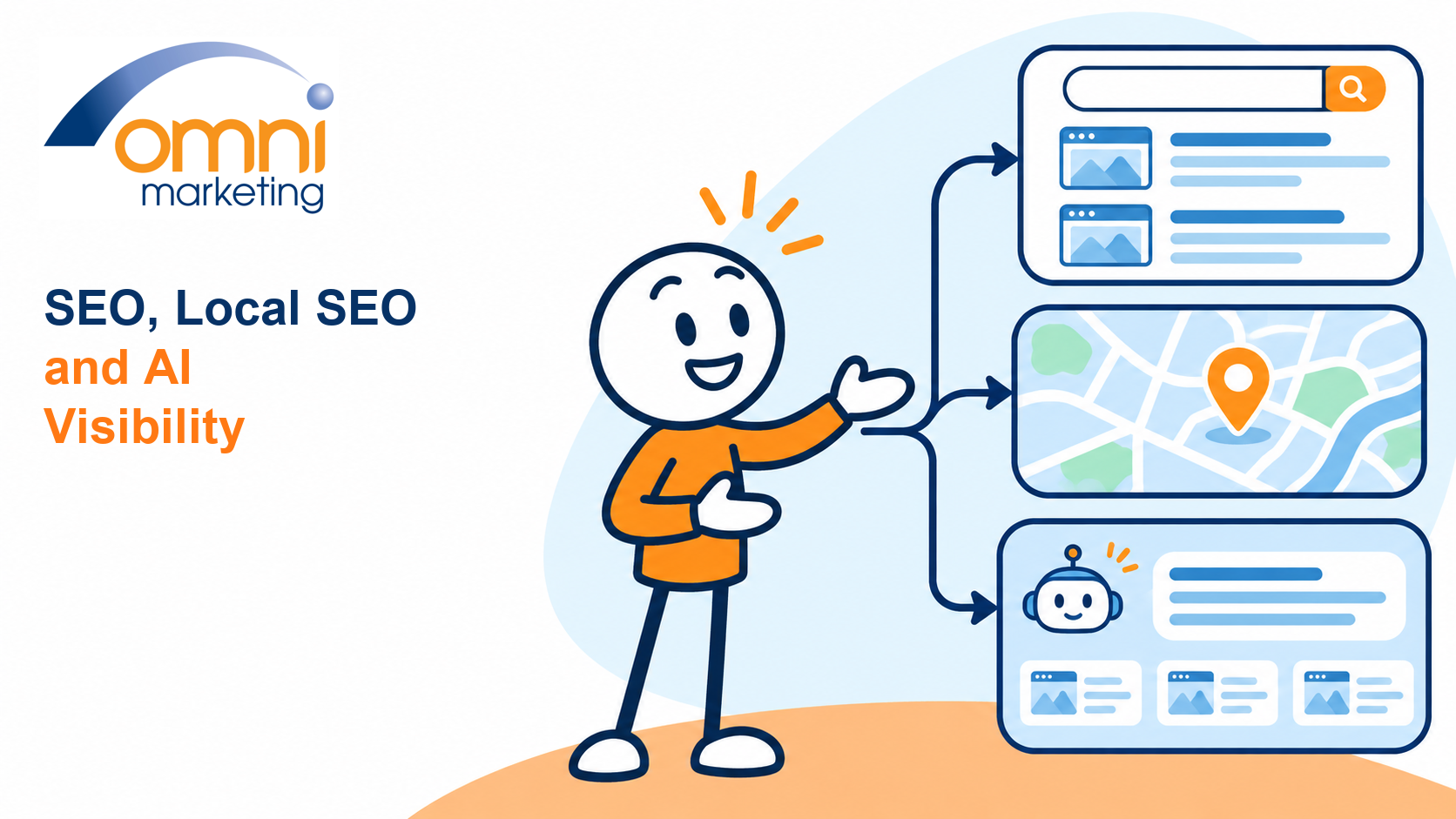
Key takeaways
- SEO concerns useful visibility in search results.
- Local SEO focuses on place-based searches and Google Maps.
- AI visibility is an observed pattern of mentions, citations and accurate representation in AI answers.
- One does not guarantee the others.
These labels are often used as if they mean the same thing. They do share a goal: helping the right customer understand and find a business. But they describe different places in that journey, so they should not be measured as one score.
Direct answer
SEO is about search visibility, local SEO is about local discovery in Search and Maps, and AI visibility is about what answer tools say and show about your business. Strengthen the same clear public evidence, then check each outcome separately.
What is SEO?
SEO is the work of making useful website information easy for search engines and customers to find and understand. It includes answering buyer questions clearly, keeping important facts current and making pages accessible. It is not a promise of a particular ranking or enquiry.
What makes local SEO different?
Local SEO is the part of search visibility concerned with a customer’s place. Google says local results in Maps and Search are based mainly on relevance, distance and prominence. Its local-ranking guidance also says complete and accurate business information can help customers find a relevant business.
A complete Google Business Profile is useful groundwork, but it is not a universal visibility pass. Read what a Google Business Profile can support in AI search for the limits as well as the value.
What is AI visibility?
AI visibility is whether an AI answer tool can accurately discover, represent, cite or recommend a business for a real customer question. It is not one published Google metric and it is not a ranking you can buy. As our guide to AI visibility for local businesses explains, a mention, a citation and a recommendation are different observations.
Google says its AI features use normal Search eligibility and do not need special AI-only technical requirements; eligibility is still not a guarantee of appearance. Google’s AI-features guidance is useful for keeping that distinction clear. ChatGPT and other tools are separate products, so Google local-ranking factors should not be presented as their formula.
What should a local business do first?
Start with the evidence a customer needs: a clear website, accurate local business details, and genuine proof of what you do. Then check three things separately: whether useful pages appear in search, whether the business is visible for relevant Maps questions, and how AI answers describe it.
A practical check
Keep the three checks separate
- SEO: can a customer find a useful page for the question?
- Local SEO: are your real location and service details clear in Maps and Search?
- AI visibility: is the business accurately represented in answers, citations or shortlists?
Record the question, place, tool and date. That produces something useful to improve, rather than an invented score. If you would like an independent starting point, request an AI Visibility Report.