Key takeaways
- Google Search is the practical starting point because local customers already use it and its AI features draw on Search.
- ChatGPT and Bing/Copilot can matter when they are part of your audience’s research habits.
- No platform gives a fixed, universal recommendation position.
- Clear services, local facts and helpful answers are worthwhile across every platform.
It is tempting to treat every new AI tool as a separate marketing channel. A better starting point is to ask where a prospective customer is likely to research a real need, then make the information they find clear, current and useful.
Direct answer
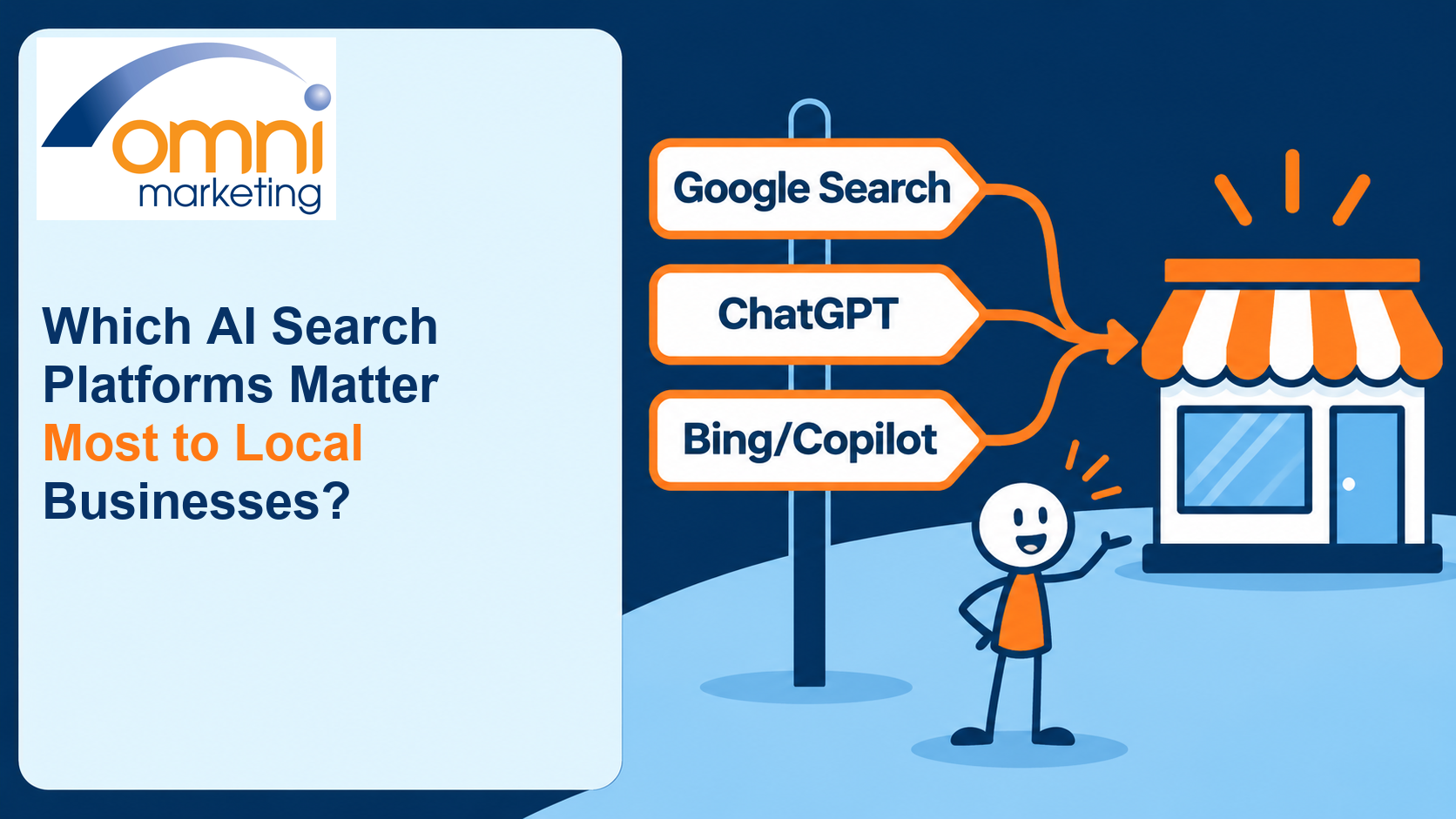
Local businesses should prioritise Google Search, then monitor ChatGPT and Bing/Copilot when those tools are relevant to their customers. The useful work is not chasing a platform score: it is making the service, customer, location and next step easy to verify.
Why is Google Search the starting point?
Google Search is the sensible first priority because it is a familiar local-discovery route and Google’s AI features are part of Search. Google says its normal Search fundamentals apply to AI features; there are no extra requirements for appearing in AI Overviews or AI Mode.
For local relevance, Google says complete and accurate Business Profile information helps it match a business to relevant searches, while relevance, distance and prominence shape local results. Read its local-ranking guidance as a reason to keep your facts aligned—not as a promise of an AI recommendation.
Where does ChatGPT fit in local discovery?
ChatGPT is worth checking if your customers use conversational tools to research services, compare options or ask for local help. OpenAI says ChatGPT Search can use web sources and that a city, neighbourhood or postcode can improve local results. That makes real buyer wording, including location, more useful than generic “best business” tests.
It does not mean every local buyer uses ChatGPT or that it will name the same businesses every time. Use it to understand the information a buyer might encounter, not as a fixed ranking report.
When are Bing and Copilot worth checking?
Bing and Copilot deserve attention where they match your audience, devices or workplace search habits. Microsoft’s AI Performance guidance describes citation information for its AI experiences. That can help you observe what is being cited; it does not prove a position or future traffic.
How should you choose what to monitor?
Choose three to five questions a genuine buyer asks before making contact. Test the same wording and location in Google, ChatGPT and Bing/Copilot where relevant. Record the date, answer, businesses named and sources linked. This makes changes visible without pretending that one answer explains every platform.
Our guide to what to measure in an AI visibility check gives you a simple way to separate mentions, citations and recommendations.
What should improve across every platform?
Make the service, ideal customer, coverage area, evidence and route to enquiry clear wherever customers look. Those basics help people assess whether you are relevant, regardless of which tool introduces them to you. Start with what AI visibility means for a local business if you need the wider framework.