Key takeaways
- An AI recommendation is an answer to a particular question, not a permanent league table.
- Clear services, accurate local facts and useful evidence help a business become easier to understand.
- A Google Business Profile remains important for local discovery, but does not guarantee an AI recommendation.
- Use repeatable buyer questions to find gaps rather than relying on one result.
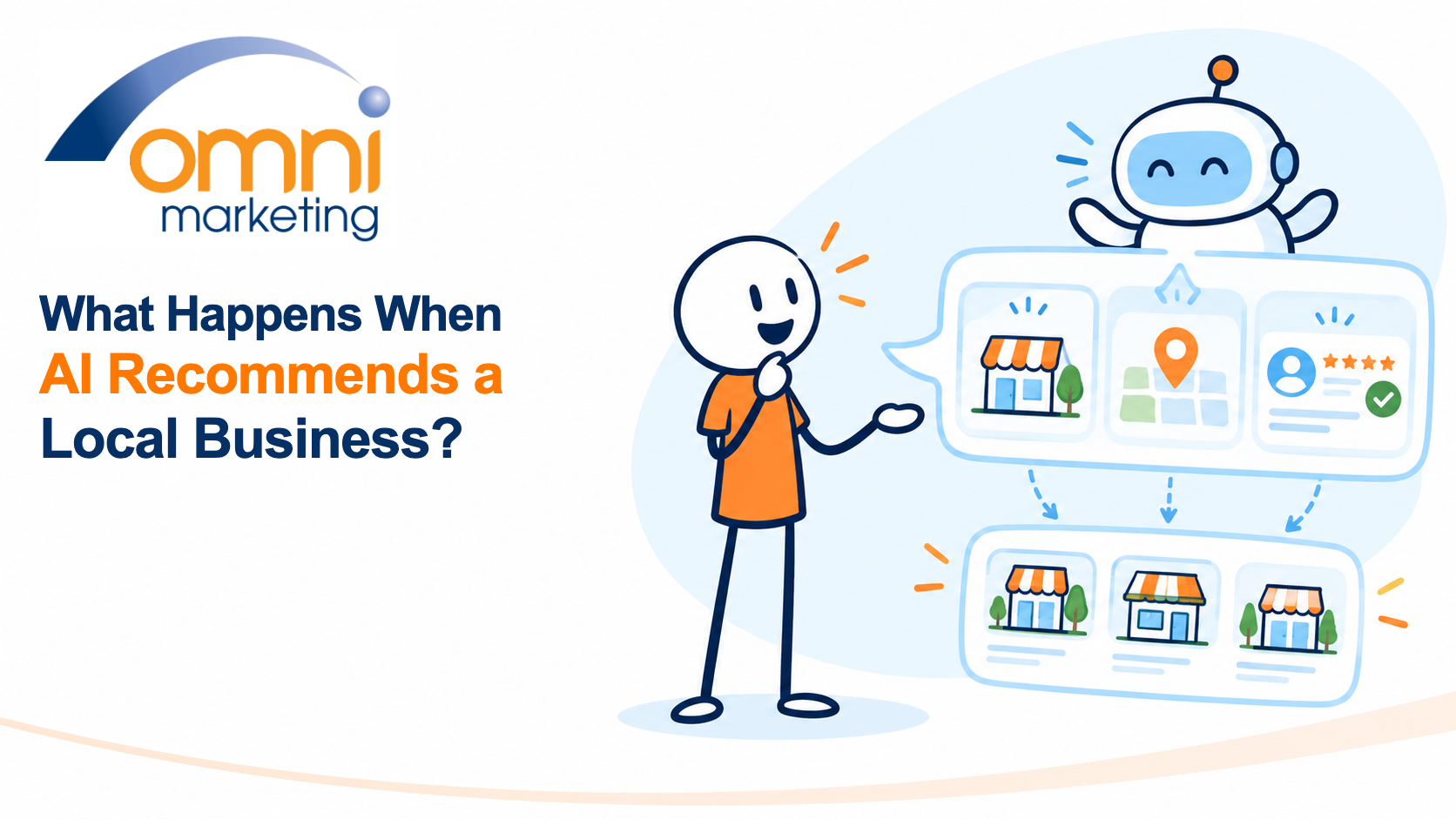
When a prospective customer asks an AI tool for a local recommendation, they are usually trying to turn a problem into a short list of credible options. That makes the question more commercially useful than a broad search, but it also makes the answer more dependent on the details of the request.
Direct answer
AI can use the question, general location and public information to form a recommendation, but no business can demand a place in the answer. The sensible response is to make your services, location and proof easy for a customer to verify.
What is an AI recommendation request?
It is closer to a buyer asking, “Which local provider is likely to help with my situation?” than simply asking for a page of results. The answer may mention businesses, cite supporting pages or provide a shortlist. These outcomes are not identical: our guide to AI mentions, citations and recommendations explains the difference.
Google says its AI features surface relevant links to help people explore a question, and that the normal foundations of helpful, reliable content still apply. It also makes clear that appearing is not guaranteed. Read Google’s AI-features guidance.
Why can two people receive different recommendations?
A slight change in service, location, urgency or type of customer can lead to a different answer. ChatGPT Search says it can use general location to improve nearby results, while Google’s local-results guidance describes relevance, distance and prominence as important factors. That is why a single test is a clue, not a verdict.
A practical check
Test the question, then test the information
- Question
- Use a real buyer question that names the service and, where useful, the area.
- Answer
- Record businesses named, links shown and whether the need was understood.
- Information
- Compare the result with your own service pages, profile and public facts.
- Next action
- Correct a genuine gap; do not chase a supposed trick.
What information helps an AI understand a local business?
Start with information a real customer needs: who you help, which services you offer, where you work and how to contact you. Google explains that Business Profile information may combine an official website, owner and customer contributions, licensed sources and other public information. Google’s explanation of Business Profile information is a useful reminder that conflicting facts make life harder for a buyer.
Google’s local-ranking guidance says complete business information helps relevance, while reviews and links can contribute to prominence. That supports maintaining an accurate profile and useful pages; it does not promise that any particular tool will recommend you.
Where should a local business start?
Choose three to five questions that genuine prospects ask before contacting you. Run the same questions over time, record what appears, then review the pages and profile information that a customer can actually see. If your business is not named, the useful next question is whether the information you control clearly answers the buyer’s need.
For a broader explanation of the gap between ordinary rankings and recommendations, read why a business can rank on Google but not be recommended by AI. For a repeatable starting method, use our ten-question AI visibility self-assessment.