Key takeaways
- AEO stands for answer engine optimisation. It is a label for work that aims to get a business named or cited in AI answers.
- It is not an official standard. Different suppliers use the term to mean different things.
- Google says that, for its search, optimising for AI answers is still SEO. Microsoft Bing says much the same for Copilot.
- Most of what AEO involves is ordinary good practice: clear answers, accurate business details and genuine reputation.
- Most local businesses do not need AEO as a separate service. They do need to check how AI tools describe them.
If you run an accountancy practice or an established local business, you may have been offered "AEO" by an agency or seen it in a marketing newsletter. It usually arrives with a sense of urgency: AI is changing search, so you need a new kind of optimisation, and you need it now.
It is a fair thing to question. AI tools are changing how some customers find a business, and our guide to AI visibility explained for local businesses covers what that means. This article looks at the term itself: what AEO is, how it relates to SEO, and whether it deserves its own line on your marketing budget.
Direct answer
AEO, or answer engine optimisation, means work aimed at getting your business named in AI answers, such as Google's AI Overviews or ChatGPT. Google says this is still SEO, not a separate discipline. Most local businesses do not need a separate AEO service, but they should check how AI describes them.
Watch the guide
What is AEO, and does a local business need it?
Prefer to watch? This short guide explains what AEO means, how it relates to SEO, what it involves in practice, and what to check before you pay for it as a separate service.
What does AEO actually mean?
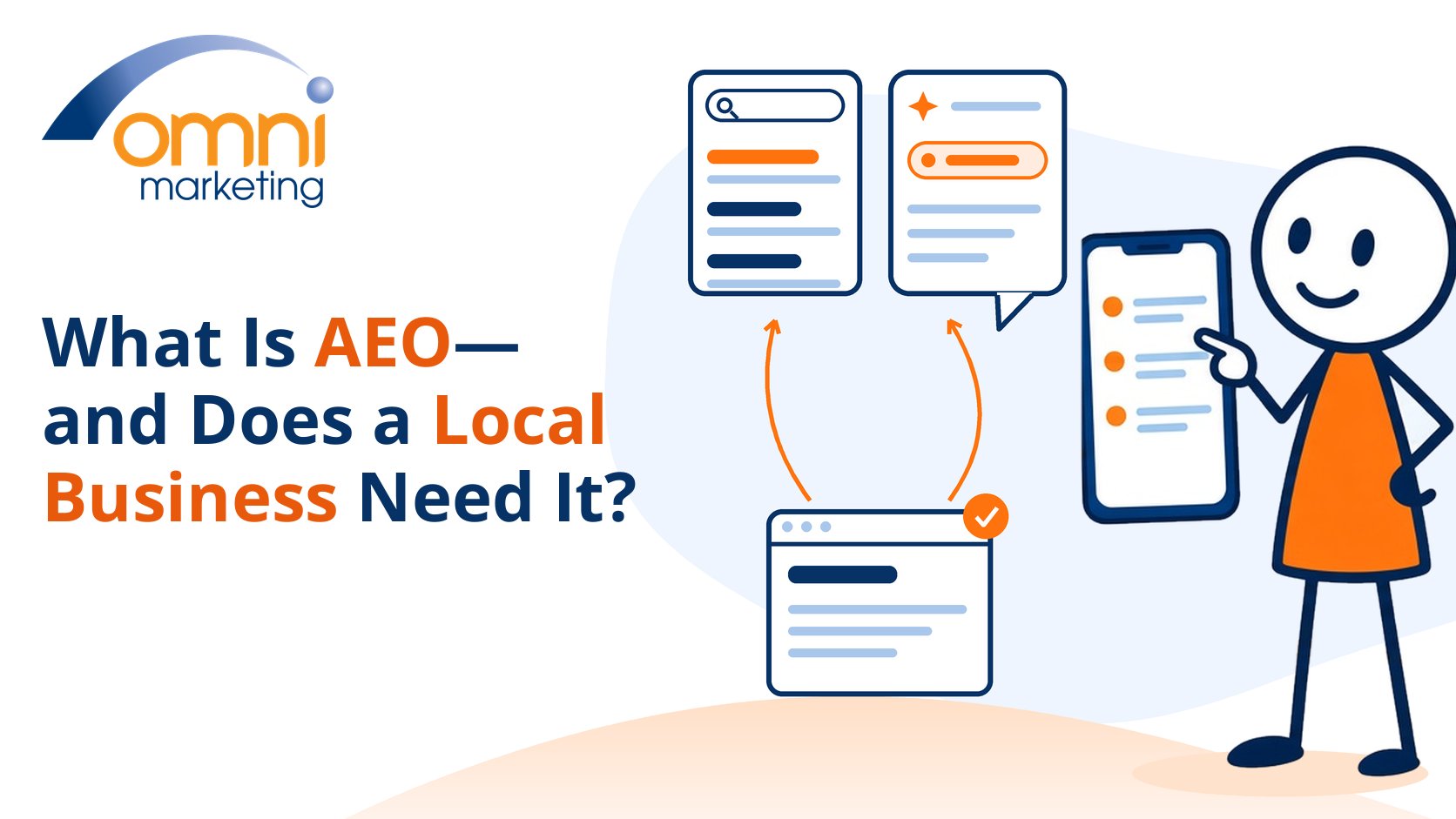
AEO stands for answer engine optimisation. An "answer engine" is any tool that replies to a question with a written answer rather than a list of links. Examples include ChatGPT, Microsoft Copilot, Perplexity and Google's AI Overviews. AEO is work that aims to get your business named, quoted or linked in those answers.
Google's own guide to optimising for generative AI features on Google Search explains both AEO and the similar term GEO (generative engine optimisation). It calls them terms "you may see used to describe work specifically focused on improving visibility in AI search experiences".
That is the important point. AEO is a label, not a standard. There is no official definition, no qualification and no agreed list of tasks. One supplier may mean writing clearer answers on your website; another may mean technical files, schema or monitoring software. If someone offers you AEO, ask them what, exactly, they will do.
Is AEO different from SEO?
Not in any way that should change your plans. Google says that, from its point of view, optimising for AI search "is optimizing for the search experience, and thus still SEO". Its AI Overviews and AI Mode draw on the same search index and the same ranking and quality systems as ordinary results.
Microsoft takes a similar line. The Bing Webmaster Guidelines say Bing and Copilot rely on the same crawling, indexing and ranking foundation as traditional search. They add that good SEO practice also supports being cited in AI answers.
The difference is in what you check, not what you do. SEO has traditionally been judged by rankings and visits. AEO adds a different question: what do AI answers actually say about you? Our article on where SEO and AI visibility overlap explains why you still need both. Our guide to how SEO, local SEO and AI visibility differ sets out what each one measures.
What does AEO involve in practice?
Mostly, it involves the basics done well. Google's guide puts useful, original content first, followed by a website its systems can find and read, and accurate local business details, including your Google Business Profile.
For an accountancy practice or local firm, that means pages that answer the real questions customers ask, in plain language. Our guide shows how to choose the customer questions your content should answer. It also means clear, consistent details about your services, location and contact information wherever they appear.
Beyond your website, it means a genuine reputation: real reviews and real mentions, rather than manufactured ones. And it means a website that loads well and that search engines can read.
Google is just as clear about what you can ignore for its search. Its list includes special AI text files, breaking content into tiny "chunks", rewriting pages just for AI, and chasing inauthentic mentions. It also says no special structured data is needed for its AI features, although structured data still has other uses. Our guide on whether you need schema markup for AI search explains the limits.
Google's guidance covers Google only. ChatGPT, Perplexity and other tools are separate products and may work differently. But none of them publishes a secret formula, and clear, accurate, useful information helps across all of them.
Can anyone guarantee AEO results?
No. Google says that even a page meeting all its requirements is not guaranteed to be crawled, indexed or shown. AI answers also vary with the question, the customer and the moment, so nobody can promise that a tool will mention your business.
Good search visibility does not settle the matter either. A business can rank well and still be left out of an AI answer, which is why a Google ranking does not guarantee an AI recommendation.
Treat any promise of guaranteed AI mentions, a top spot in ChatGPT or a "special relationship" with an AI company as a warning sign. What an honest supplier can offer is better groundwork and a regular, transparent check of what AI answers say.
Does a local business need AEO as a separate service?
Usually not. If your website, content and business details are being looked after well, most of what is sold as AEO is already covered. Paying twice for the same work under a new name does not make it more effective.
Google's own advice on whether you need an SEO says a small local business can probably do much of the work itself. It suggests asking anyone who offers "AEO" or "GEO" services whether their advice matches Google's official guidance.
What does deserve attention is the check. Before you pay for anything, find out how AI tools describe your business today with a free AI Visibility Report. Then compare it with what good AI visibility looks like for a local business, and fix the gaps that matter. We will cover the questions to ask before paying for AI visibility work in a future article.
A practical check
Before you pay for "AEO"
- Ask what it includes. Get a plain list of tasks, not just the label.
- Look for overlap. Check whether your current SEO or website work already covers it.
- Check the advice. Ask whether it matches Google's and Bing's published guidance.
- Avoid guarantees. Walk away from promises of AI mentions or top spots.
AEO is a new name for an old idea: help the right customers find clear, trustworthy information about your business. The tools have changed, but the groundwork has not, and the one genuinely new task is checking what AI answers say about you. Our guide to AI visibility for local businesses shows how the pieces fit together. If you want a clear starting point, request an AI Visibility Report.